

New AI Court Ruling Has Parents Asking: Are My Kids’ Photos Safe Online?
Okay, I'll admit it. I'm a proud mom, and I love posting photos and videos of my daughter on social media. Now that she's older, I forget she doesn't love it when I post a silly one of her, so I've had to learn to ask permission before I post.
I have my settings set to private, so I figured it's no big deal since it's only friends and family who can see it. But police say that's not necessarily keeping her safe.
AI Can Turn Your Child's Photo Into Something Disturbing
Just last week, "a federal appeals court ruled that privately owning AI-generated images of child sexual abuse, made without real child involvement, is protected under the First Amendment if the images stay in your own home," according to an article from Yahoo.
Um, that's concerning.
I dug a little deeper and found an explanation by Snopes. Judge John Z. Lee of the U.S. Court of Appeals for the 7th Circuit, though concerned about the nature of the material, felt like his hands were tied. He referred to two U.S. Supreme Court decisions from 1969 and 2002.
Stanley v. Georgia (1969) holds that people have the right to keep obscene materials in the privacy of their homes without fear of government prosecution.
And Ashcroft v. Free Speech Coalition (2002) says child sexual abuse material that's "virtual," or computer-generated child pornography that does not depict real children, is not child pornography and is protected by the First Amendment of the U.S. Constitution.
The problem is, AI has to base its creations on something... and on someone. That someone could be your child. And laws have not caught up with technology, especially AI technology.

Police Say AI Child Exploitation Is Increasing
According to Officer Theman with the Springfield, MO, Police Department, they've seen an uptick in AI child pornography. And apparently, it's pretty easy to make.
He said that a predator will see an image of a child, download it, and within a matter of seconds, they can convert it into an explicit image of your child.
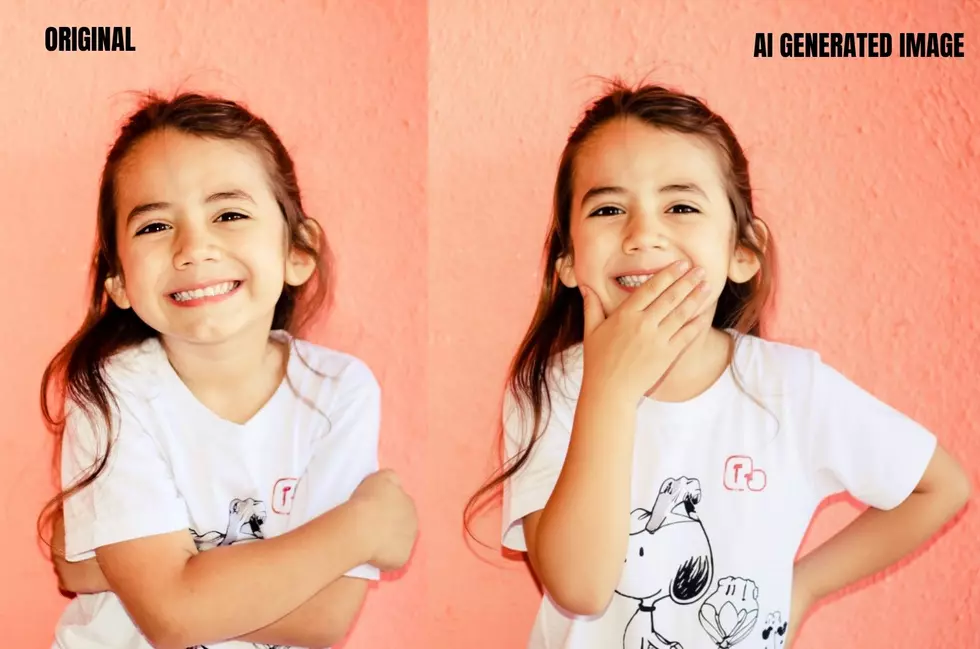
Look at the photo above. I used the tools in our paid Canva subscription to create the image above. It took about three seconds. And aside from Snoopy missing part of his head, I'd say it looks pretty real.
As a parent, I don't want this for my kids or any kids.
The Tim Tebow Foundation posted that predators are using AI to lure children into online and even real "relationships." They can create images and even use vernacular to appear a child or teen's age.
What Happens to Your Child's Photos Once They're Online?
Once your photo is online, AI Ethicist Catharina Doria, said that photos can be copied, scraped, and reused. Social media and data companies can scrape these photos to use them to train AI, surveillance systems and other technology.
She also warns that posting photos can lead to identity theft.
If you post birthday photos, you are potentially giving hackers information like your child's name, birth date, age, and city where they live. When you post lots of photos over the years, it creates a complete digital profile of your child.
Does Covering Your Child's Face Protect Them?
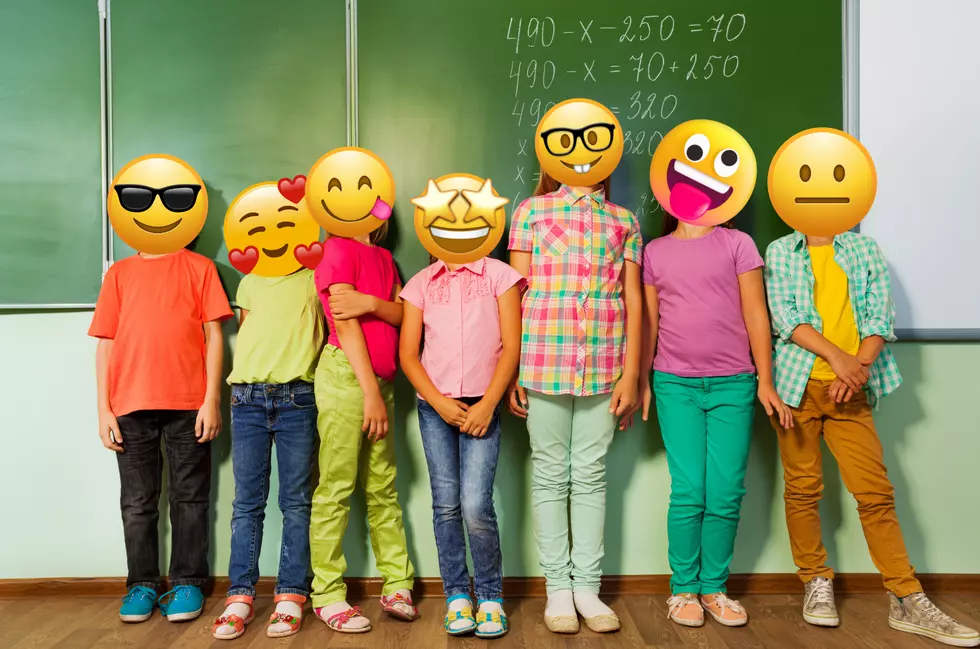
And even putting an emoji like a heart or smiley face over their face doesn't necessarily protect your child these days.
According to Safe On Social, AI doesn't need their entire face. Technology can potentially identify or track people using other identifying features and information contained in an image. That means simply covering your child's face isn't necessarily enough to remove all identifying information from a photo.
Is a Private Social Media Account Really Private?
So, as I said earlier, I just put all my socials to private, but apparently, that's not as safe as we think it is.
First of all, you don't always know what everyone in your social media circle is doing online. Even people we know and trust can have their accounts compromised, and anyone who can see a photo can potentially save or share it.
When a sexual abuser is found out, many times even folks closest to them had no idea what they were doing. When you consider 1 in 3 girls are sexually abused before the age of 18 and 1 in 5 boys are sexually abused before the age of 18, according to The Advocacy Center, the odds that you know a child sexual abuser are significant.
Even if they've never hurt a child, with the laws making it legal to keep AI child sexual abuse content at home, child predators are free to use photos of kids to create something terrible. When you have hundreds of friends and family viewing your content, the odds that someone in that list is a predator is pretty high. That's a really uncomfortable thing to think about, especially when you are posting pictures of your children thinking you're sharing them with people you know and trust.
That's why police and online safety experts say parents should think carefully about what they post.
Read More: Would You Shop at a Store With No Employees?
Read More: What Does a Store with No Cashiers or Employees Look Like?
How to Safely Post Photos of Your Kids Online
If you do choose to post photos, Doria has some tips.
First off, minimize identifying details like names, ages, birth dates, and school information, and turn off geotagging.
Never post in real time. Instead, consider posting a few days after an event or after you've left a particular place.
And be very selective with images. Do not post photos of children undressed or in swimsuits, diapers, or sleep clothes. Also, avoid beach, pool, bath and sleep photos.
The Safest Choice May Be Not Posting at All
The best thing to do is just not post photos of your kids online. It's hard. I know it is. I'm a mom who loves sharing pictures of my daughter, too. But our kids don't get to choose what pictures of themselves are floating around online.
Maybe their future selves will thank us for being a little more careful now.
QUIZ: Can You Guess the Iconic TV Show From Just One Opening Freeze-Frame?
Gallery Credit: Stephen Lenz
More From WDKS-FM


