

Kentucky’s Most Painful Caterpillar? This Spiky Sucker Stings!
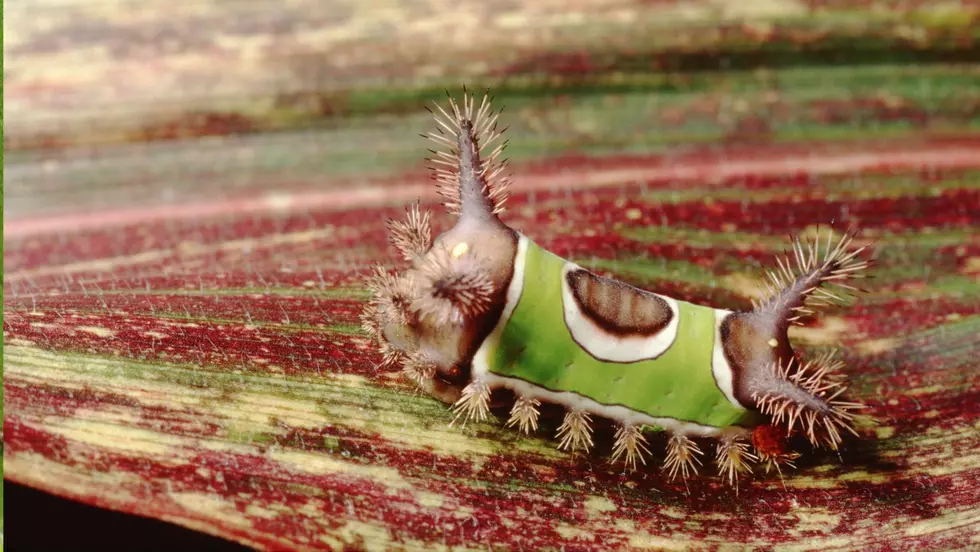
Have you ever spotted this crazy looking critter in the wild? Saddleback Caterpillars live in Kentucky, but they look kind of like something from another planet. From the funky pattern and coloring to the tons of tiny little furry antennae, you may be tempted to pick one up, but you would surely regret it.

Saddleback Caterpillar (Sibine stimulea)
According to the University of Kentucky, "The caterpillar is brown in front and rear, green in the middle with a purple spot in the center of the green saddle. There are two prominent horns on both the front and rear. Stings by this insect can cause severe irritation. Saddlebacks can be common and are typically found on deciduous trees such as basswood, chestnut, cherry, oak, and plum, but occasionally they can be numerous on corn."

Those little whiskers can pack a serious punch. Like bee stingers, they are hollow quills that connect to poison glands under the skin. However, the burn that comes from these caterpillars is way worse than a bee sting. They serve to protect the little crawlers from being eaten by predators, and gardening enthusiasts are just caught in the crossfire. They are incredibly painful, and some say they hurt more than any other garden pest.
How to Treat a Saddleback Caterpillar Sting
If you do happen to come into contact with this caterpillar, don't go with your first instinct to use your hand to brush it away! Find a stick or garden tool so that you aren't hurting in multiple places. You may feel your lymph nodes swell and even experience nausea in some cases. The skin will redden and swell up.

Try to wash the sting with soap and water and remove any spines that may remain. An adhesive tape can be helpful for this. Hydrocortisone cream and a cold compress will help relieve some of the irritation, but it is not going to be fun for a little while.
If you have a history of allergic reactions to bees or insects, it would be a good idea to visit a convenient care center just in case. The affected area could take up to a few days to start feeling normal again.
I haven't been able to find anything useful about the Saddleback Caterpillar. They chow down on your plants and vegetables, and then morph into moths. They are really only food for insect predators like the Paper Wasp or Assassin Bug, which both sound interesting themselves, but I don't think I would want to come across them in nature either.
Just one of those pesky critters to beware of for sure! Have you ever encountered one before? Chime in on the Facebook conversation or send a message on the app chat!
LOOK: 20 of the biggest insects in the world
Gallery Credit: Andrea Vale


