

I Never Wore Shorts Because I Hated My Legs, But a Medical Diagnoses Changed the Way I Saw Myself
I've Always Had Big Legs, But Something Was Off
All my life, I’ve noticed my legs don’t match the rest of me. To be blunt, I’m thin on top and thick on the bottom. I always just chalked it up to my pear shape, but a few years ago, I started noticing a lot of (what I thought was) cellulite on my legs. Now, I know almost all women have cellulite, but this was different, and it was just on my thighs.
If you do the pinch test, I have less than an inch of fat pretty much all over my upper body. But my lower body? It was ballooning.
I tried taking some photos here in the office of my legs but the lighting wasn't great until I zoomed in. Let's have a look at my gorgeous gams, shall we?
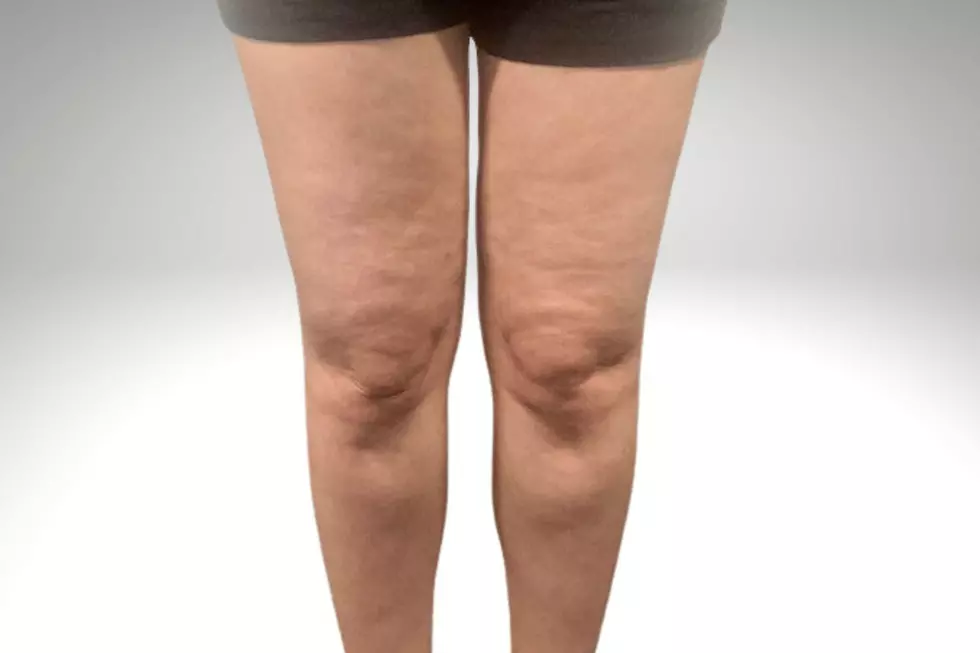
Go ahead and admit it. The tops of my legs look like I stuffed a bunch of cottage cheese under my skin. That's what I think anyway! Ha!
When Healthy Habits Weren’t Enough
I’m all about body positivity and being healthy. I watch what I eat, and I regularly exercise. But that started getting harder and harder. My legs hurt, they bruised super easily, felt so heavy all the time, and honestly, they didn’t look like they belonged on my body. I hated my legs. For a long time, I only wore capris or Bermuda shorts, and I hated doing that too. Why couldn't they just match me?

The TikTok Video That Changed Everything
One day, I was scrolling TikTok when a girl popped up talking about lipedema. Lipedema is a chronic condition that causes abnormal fat accumulation, primarily in the legs, sometimes the arms, and it mostly affects women. This was the actual video I saw. And, at that moment, a lightbulb went off. It was ME!
At my next doctor’s appointment, I brought it up. My legs don’t look abnormally large if I’m wearing pants, and I’m well within a healthy weight range for my height. So, there wasn't a reason to check my legs. But after examining them and looking for the classic signs, my doctor diagnosed me with stage one lipedema.
What Is Lipedema?
Lipedema is a connective tissue disorder and sometimes referred to as “diseased fat." It’s incredibly frustrating because you can’t really diet or exercise it away like you can with regular fat or cellulite. On top of that, most doctors don’t know a whole lot about it, so managing it is often a mix of trial and error, or liposuction, which is sometimes the only option once it progresses.
For me, getting an actual diagnosis was huge. It allowed me to work with my insurance company to get some tools and treatments to help manage it.
Early Diagnosis Is Everything
As someone with stage one, I’ve learned that it’s incredibly important to eat right and stay active, not to shrink my legs, but to keep the disease from progressing, because once it does, it’s almost impossible to go back.
Common Signs and Symptoms of Lipedema
According to The Lipedema Project, the most common signs include:
- Fat that’s disproportionately stored in the legs or arms
- Pain or sensitivity in the affected areas
- Fat that feels stiff, bumpy, or dimpled (especially in the thighs)
- Fat that doesn’t respond to diet or exercise
- Easy bruising
- Swelling in the limbs that stops at the ankles or wrists
- Onset or worsening during hormonal shifts (like puberty or pregnancy)
- Family members with a similar lower-body shape
What Causes Lipedema?
Remember when I said even doctors don’t know much about lipedema? Well, no one knows for sure what causes it, but there are some strong theories. Most believe hormones and genetics play a major role. There’s also evidence that people with lipedema often have lymphatic and vascular insufficiencies. Basically, your body just doesn’t move fluids through properly.
Read More: Is It Hard to Let Go of Your Kids' Toys When They Grow Up?
How Do You Treat Lipedema?
I’ve learned a few things over the past year that have made a HUGE difference in how my legs look and feel. My doctor gave me some simple tools to help move fluid more effectively, and they actually work.
For starters, I wear compression garments as often as I can. I also drink a ton of water and really watch what I eat.
Oh. And I bought a vibration plate. I stand on it for about 15 minutes a day, and it shakes me around like crazy, which helps get things flowing. Afterward, I’m super itchy, which apparently means the blood flow under my skin is kicking in. I’ve been cold-natured all my life, and now? I can actually wear shorts and t-shirts to the office.
Dr. Allison M Bush is Doctor of Physical Therapy, Certified Lymphatic Therapist through the American Academy of Lymphatic Studies, and Certified Dry Needling Practitioner through the American Academy of Manipulative Therapy. She has been in practice for 16 years and is currently in private practice at VSC Wellness Center, Evansville, IN 47715.
She gave me more insight into therapies that can help. "Cupping, a technique that results in negative pressure to soft tissue, can create a controlled microtrauma to remodel tissues and has similar potential side effects of soreness and bruising. Cups are applied using a suction technique with suction applied to a level of tolerance to the individual. I typically start with 5 minutes and progress the patient up to 10 minutes of cupping depending on patient tolerance and skin integrity."
Instrument-Assisted Soft Tissue Mobilization (AKA Scraping): This technique uses blunt-end tools to literally "scrape" the skin with applied pressure in an attempt to break up fibrotic tissue. This technique can be beneficial whenever unwanted fibrotic tissue is present and scars. The amount of pressure applied to the patient by the practitioner very much depends on the patient's tolerance level as well as the integrity of the patient's skin. In cases of very fragile skin or open wounds, this technique should be avoided altogether. Lubrication, such as lotion, should be used to decrease the friction on the skin during the procedure. This treatment creates a controlled microtrauma that remodels tissues. Side effects can include pain, bruising, and petechiae (broken blood vessels). When instrument massage is performed for people without lipedema, these side effects usually resolve within 48 hours, but they can last much longer if performed on lipedema fibrosis due to fragile vasculature. Because of this, it is critical to have proper training in these techniques, as well as to use caution and monitor side effects.
Speaking of Shorts…
I spent most of my life avoiding shorts. And it sucked. In fact, I looked for a photo of my legs before I started treating this, and it didn't exist.
Here's a photo from my honeymoon. Check out these awesome shorts. It didn't help that the airline lost our luggage, and the only thing I had in my carry-on was sweat shorts.

And then there's this gem from my trip to Arizona. Love wearing jeans in 100-degree heat.

Now that I’m in my 40s, I honestly don’t care what people think about me or my legs. Do I pucker up a little when I see photos? Yep. But who doesn’t? That’s not going to stop me. I’m finally learning to accept that these are my legs, and I get to decide how I feel about them. Not anyone else. And I'm proud that I have maintained stage one for as long as I have. Proud that the hard work has paid off.
In fact, I'm so over caring, here's a recent photo I took and posted to my personal Facebook page. My legs - in all their lipedma glory!

Surround Yourself With the Right People
When I was diagnosed, I decided to tackle this head-on. I joined an online support group, which helped me find solid recommendations and real success stories. I also found a doctor who actively studies the disease and actually helps me navigate it. Not just brush it off.
And my family? One day, I asked my husband if he thought my legs looked “better.” His response? “I don't think they ever looked bad.”
Actual photo of my supportive husband.

My goodness, I love that man. They did look bad. At least to me. But that’s not what he saw.
Think You Might Have Lipedema? Here’s What to Do
Dr. Bush gave me more insight into this often overlooked diagnosis. "Lipedema is more common than we think. It is typically overlooked by many healthcare providers, as most have little to no education or training on the lymphatic system. Basically, it is not taught highly in school and therefore requires post-graduate AKA continuing education in order to gain the knowledge and techniques."
If you think you may have lipedema, do a little research. There are tons of videos and online resources that explain the condition in plain terms. Then, talk to your doctor. And don’t let any provider dismiss you.
Be your own advocate, or bring someone who will speak up for you.
According to Psychology Today, a recent survey of 900 women aged 25–34 found:
- 93% felt dismissed when seeking medical help
- 40%+ had to visit multiple doctors before getting a diagnosis
- Many were told their symptoms were “just stress” or that they were “too young” for anything serious
That’s unacceptable. Don’t stop pushing. Ask around. Look for doctors with a track record of listening and helping.
Small Side Story (That Proves My Point)
A few years ago, I broke out in a full-body rash. It was horrific. I could barely move. I had to sleep with bags of frozen peas on my skin just to get through the night. My mom moved in with me to help because I couldn’t function.
I saw so many doctors. Family physicians. Dermatologists. An infectious disease specialist. Even the ER. Every time, I got the same answer:
“We don’t know what this is. Sorry. Good luck.”
Finally, out of desperation, I asked my new OBGYN if she’d see me. She was the only female doctor I saw during that whole ordeal. She took one look, did a biopsy, and sent it off. The very next day, she personally called me and said:
“You have chicken pox! And this is so easy to treat!”
She figured it out. I’d had a reactivation because my immune system couldn’t fight it off. I’ve been on a low-dose antiviral ever since and only have flares if I don't take my meds properly.
Final Thoughts
If something feels off, don’t give up. Trust your gut. Keep pushing until someone listens. Someone will help you. You just have to find the right person.
You deserve answers. And relief.
Keep fighting.
These Are America's 10 Most Unhealthy Fast Food Restaurants
Sweet Lilly's End of Life Photoshoot Will Bring You to Tears
Gallery Credit: Ashley S.
More From WDKS-FM


